If you’re sourcing custom jerseys for your team or organization, understanding how a global leader like Nike manages its production process can provide valuable insights. From high-performance player jerseys to fan-made jerseys, every Nike jersey is the result of a carefully coordinated global manufacturing strategy.
In this article, we’ll explore where and how Nike jerseys are produced—including key sports jersey factories in China, Vietnam, and the United States—and what this means for quality, sustainability, and scalability. Whether you’re in sports sourcing or simply interested in the sportswear supply chain, this article will help you appreciate the craftsmanship behind every stitch.
Where Are Nike Jerseys Made?
Nike Jersey Production in China
China is the main hub for making Nike jerseys. I believe a group of key cities there handles both large orders and new designs:
Putian (Fujian): This city is known for its skill in making sportswear and has major Nike partner factories.
Guangzhou (Guangdong) & Xiamen (Fujian): These cities are workhorses. They produce huge numbers of jerseys very quickly, which is essential during peak seasons.
Other important sites are Fuzhou, Shenzhen, Chuzhou, Wuxi, Yantai, Nanning, and Suzhou. In my experience, each city handles a specific job. This could be treating special fabrics, putting the jerseys together, or adding custom details for special editions.
Vietnam’s Two-Region Production Plan
Vietnam is excellent at handling both large production runs and specialized work:
In the South, factories near Ho Chi Minh City, Dong Nai, and Binh Duong are giants. They handle Nike’s biggest orders.
In the North, cities like Hanoi, Hai Phong, and Hai Duong focus on new techniques and special clothing. They meet the strict quality needs for top sports teams and unique releases.
U.S. Factories
Nike also makes products in the U.S. I find this important for major league contracts and when they need to get products to the North American market fast. They use special factories for this:
Easton, Pennsylvania: This was once the famous Majestic factory. It is now part of Nike’s Fanatics partnership for official MLB jerseys.
Berlin, Wisconsin: Some NFL jerseys are made here, including special ones for teams like the Green Bay Packers. This supports local jobs and meets strict league rules.
I like that Nike keeps its innovation in the U.S. Its Air sole facilities in Oregon, Missouri, and Goodyear, Arizona push design forward and focus on sustainability. Every new design since 2008 has used at least 50% recycled factory waste. This action has kept more than 57 million pounds of waste out of landfills in just one year.
Replica Jerseys
To offer options for different fans and budgets, Nike produces replica jerseys in Honduras and Guatemala. I think this is a great approach. It lets more people around the world get gear that looks authentic but at a lower price than the on-field uniforms.
How Nike’s Production Network Is Changing
Since 2012, Nike has made a smart move to outsource most of its jersey making. From my view, the goal was to get consistent quality and reduce costs. The worldwide market for football jerseys is $7.9 billion (2024). It is expected to reach $10.9 billion by 2031. In the U.S. by itself, wholesale sales of football team uniforms were over $419 million in 2023.

Related Reading: Where Were Reebok Jerseys Made?
Where Are Nike’s Different League Jerseys Made?
Football (Soccer) Jerseys
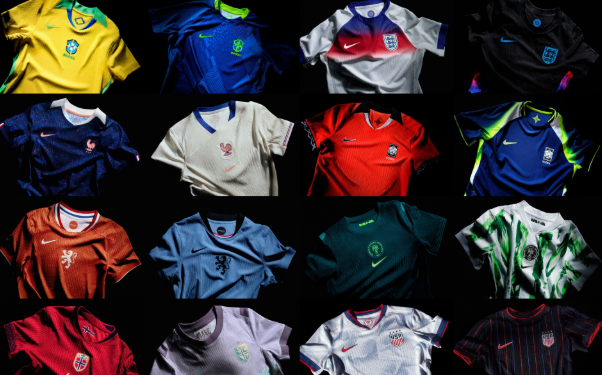
For big events and top leagues, I see that Nike makes most of its football jerseys in Vietnam, China, and Indonesia. I believe these countries give Nike what it needs. They have skilled workers, modern factory technology, and a focus on using green materials. Vietnam is a standout with over 100 Nike-partnered factories for sports clothing. They are great at balancing cost, quality, and being reliable. This makes Vietnam crucial for World Cup and pro club jerseys. China offers advanced infrastructure and established supply networks. Indonesia adds to the mix with lower costs and a growing textile industry, which completes this group.
NFL Jerseys
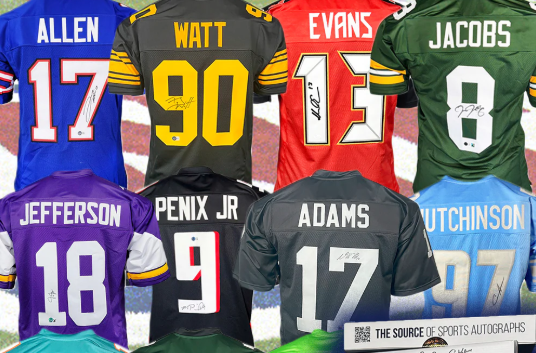
In my view, Nike’s deal with the NFL has two parts. The real “on-field” jerseys are for the pro players. Nike designs and makes these itself in its best, high-tech factories. These factories, some of which are in China, are all about performance, special fabrics, and tough testing. For fan football jerseys, the situation is different. Nike lets another company, Fanatics, handle the production and sales. So, while these jerseys have the Nike logo, Fanatics’ factories make them. Some are made in the U.S. Others are made at approved international locations, like certain factories in China that follow Nike’s rules.
What Makes Each Jersey Different
Soccer: Nike produces these in its own factories. I like that they focus on sustainability. For big tournaments, a jersey might be made from 8-20 recycled plastic bottles.
NFL On-Field: High-tech factories controlled by Nike deliver innovation for pros. I suggest you look at how every stitch is made for top performance.
NFL Fan Replicas: Fanatics produces these in different factories. A benefit is that they can offer on-demand custom jerseys and local U.S. production.
I believe Nike’s strategy for each league is smart. It’s more than just about logistics. It’s about giving pros, clubs, and fans the specific things they need. The company also keeps its focus on sustainability, quality, and new ideas. In the end, I think each jersey becomes a special item, built by a global team and made for the passion of the game.

Related Reading: 7 Reliable Volleyball Jersey Manufacturers From Brazil
How Nike Makes Its Famous Jerseys
Design & Approval
Every Nike jersey starts with a team effort. Team officials and Nike’s designers work together. They agree on details like color, stripes, and logo placement. They review and approve everything. This captures the team’s spirit in the jersey. In my opinion, the prototype samples are crucial. Nike tests them for fit and toughness before any large-scale production begins.
Material Selection
I’ve noticed Nike doesn’t use ordinary cloth for its jerseys. They use advanced materials. Performance polyester adds power. Elastane gives it a 600% stretch. A special polyurethane makes the logos sharp and tough. I think every fiber is selected for an athlete. The material is strong, wicks away sweat, and is made to be durable.
Fabric Creation
This is not simple knitting. I find the Jacquard weaving technique very effective. It weaves patterns, numbers, and logos directly into the fabric. This makes the colors last season after season. Other knitting methods make the fabric light and stretchy. They also remove annoying side seams. The outcome is total freedom to move with no extra weight.
Cutting
There is no room for mistakes, and they don’t use scissors. Computer-run CNC machines cut the fabric into exact panels, every time. I suggest this is why the fit is so consistent. It means your jersey will fit perfectly, whether you are an athlete or a fan.
Printing & Customization
Nike uses sublimation printing, which I think is a great choice. The colors and graphics are fused into the fibers, not just painted on. This creates a bright style that won’t fade. If you need a player’s name fast, they have a solution. Heat transfer machines and embroidery can add it in hours. This creates sharp and very durable details.
Assembly & Sewing
Sewing teams put the panels together using strong, reinforced seams. Different teams might work on different parts. Based on my experience, every stitch is made for strength and to prevent tears. There are no weak points. The result is a seamless product made on a large scale.
New Techniques and Fabrics
Nike is always innovating. They use robotic sewing, 3D-printed prototypes, and quick jersey customization. I think these methods improve efficiency and consistency. Nike lab-tests every jersey for color fade, durability, and comfort. Features like ventilation zones, sweat-wicking threads, and stretch panels create a fit perfect for top athletes.
In the end, it’s more than just fabric. It’s Nike’s production power behind every detail. Based on my experience, this is how a simple piece of cloth becomes an iconic jersey, game after game.

Related Reading: 7 Types Of Rugby Jerseys For Wholesale & Custom Production
How Nike Maintains Jersey Standards: Quality Control and Labeling
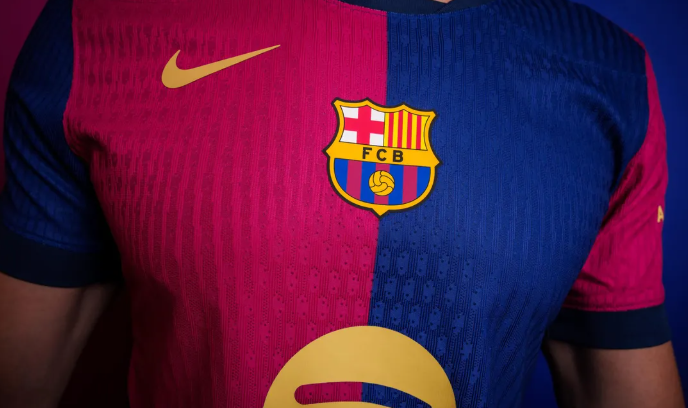
Nike’s Multi-Step Quality Control Process
The process for every batch of Nike jerseys begins at the batch reception stage. Here’s what I see happening: Workers count each shipment. They check it against delivery papers. They also look for any damage or signs of tampering. Workers match products to purchase orders. They confirm every detail before anything moves to the next step.
For me, the most important part of quality assurance is product specification confirmation. Teams check: Serial and model numbers, Color accuracy, Design details, Size and label correctness. I think it’s crucial that every detail meets Nike’s strict standards.
Next is the visual defect inspection. It’s a classic method, but I find it’s still essential, even with today’s technology. Specialists look for: Flaws in the stitching, Colors that don’t match, Prints that are off-center, Any other physical flaws.
A jersey must pass this inspection before it can move to functional and material testing. They push fabrics to their limits to test for durability. They must follow all chemical safety rules. They also check for the correct labels and safety features.
Then, size and dimension checks begin, and precision is key here. I suggest making sure every measurement matches Nike’s size charts. Jerseys that don’t measure up are set aside for fixing or removal.
Compliance, Labeling, and Global Audit Trails
Based on my experience, Nike’s documentation routines are very thorough. They log every pass, fail, or retest with dates and inspector notes. This detailed approach makes it simple for both their own teams and outside auditors to review everything.
For labeling, Nike requires: Size markings, Material makeup, Care instructions, Country of manufacture and Safety standard information.
Making Room for Improvement and Transparency
It seems to me Nike isn’t just about catching errors. They are always trying to improve. They use systems such as Total Quality Management (TQM), the PDCA (Plan-Do-Check-Act) cycle, and Six Sigma in their everyday operations. I believe these methods help them remove waste and lower defect rates. They also make sure problems are fixed right away.
I also recommend paying attention to Traceability, which is another key part of their system. They can file and review every inspection result. If an issue appears, it starts a corrective action. This could mean changing a process, training a supplier, or returning a whole batch. They keep records of every change. I think this creates a useful guide to prevent future mistakes.
Key Trends Nike’s Jersey Manufacturing for 2025
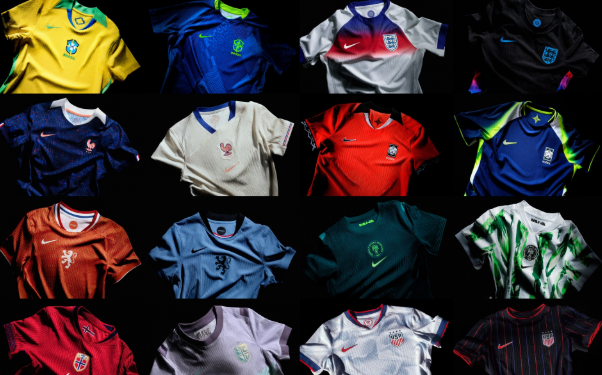
Advanced Materials and Designs
For 2025, I see Nike pushing its materials forward with Dri-FIT ADV technology. I believe this is more than just a marketing name. Designers use body-mapping, 4D data, and digital tools to place mesh and ribbing with care. They zone every panel and seam. This improves how the jersey breathes, moves, and supports you.
Fans and collectors also shape what Nike makes. I’ve noticed a high demand for classic styles. This caused a 35% increase in using gold/silver rated certified leather. As a result, Nike had to change its design and supply plans.
Automation and Factory Network Changes
Nike’s manufacturing approach is high-tech and it doesn’t own its factories. The company uses over 500 contract factories. It has no Nike-owned plants. This network covers Vietnam, Indonesia, and China. Inside these factories, you find robotic cutting machines, RFID tracking, and automated packaging. Smart sensors help run production efficiently and consistently. I believe this digital process greatly improves accuracy, lowers mistakes, and makes it possible to create custom gear for athletes on demand.
Sustainability is the Main Goal
To me, Nike’s “Move to Zero” campaign is part of every step. The results are clear: 99% of footwear waste now stays out of landfills. Every year, over 1 billion recycled plastic bottles are used for jersey yarn and Flyknit uppers. Nike Grind is made from old shoes and extra material. It is used for uniform parts and Swooshes.
I suggest looking at their sustainability goals, which go past simple recycling. They have circular manufacturing programs. These programs turn old shoes and clothing waste into new things. This includes playground surfaces, running tracks, and new soles for products. The company also has a goal to use 100% renewable energy in its own facilities by 2025.
Sourcing and Regional Skills
From what I’ve seen, Nike gets its materials from all over the world. They get natural rubber from Southeast Asia. They source synthetic yarns and polyester from top suppliers. They also get certified leather from the best tanneries. In my opinion, the heart of their design work is in Beaverton, Oregon. The actual making of the products, both by hand and machine, happens in certified partner factories in Asia. Each region is chosen for its strengths. Some are great for hand-made premium items. Others use automation for large-scale production. I believe strong quality control is present every step of the way. To me, a jersey is more than a team’s shirt. It represents culture, new ideas, and a worldwide view of sports apparel.
Conclusion
Looking at Nike’s global jersey production network, I’m amazed by how they balance innovation, quality, and sustainability across continents. From Vietnam’s specialized jersey factories to China’s jersey design hubs, every jersey tells a story of careful craftsmanship and cutting-edge technology. What strikes me most is how Nike transforms recycled bottles into performance gear while maintaining the highest standards.
Just like Nike, creating the perfect jersey requires a perfect combination of materials, technology, and manufacturing expertise. BallsJersey specializes in providing high-quality custom jerseys to teams, leagues, and organizations, combining innovative design with a reliable global production network. Let us help you create jerseys that perform and look great.Visit Ballsjersey.com or [email protected] to contact us.