

I find the differences between rugby and American football jerseys fascinating. Their designs and functions are very distinct. I often compare a rugby player’s tight-fitting gear to an American football player’s bulkier uniform. The materials and cuts are unique to each sport. Based on my experience, the jerseys do more than protect; they tell a story about the team. There is, however, one overlooked detail. I suggest this detail could change your perspective on these uniforms.
Comparing Rugby and American Football Jerseys
|
Feature |
Rugby Jersey |
American Football Jersey |
|---|---|---|
|
Fit & Cut |
Tight, body-hugging fit—I think of it as armor you wear to avoid grabs and move through tackles. Every part of the fit matters. |
Often loose for layering and comfort. I notice skill players like receivers prefer a slimmer “skill” fit for running routes. |
|
Fabric Material |
Use heavy, strong fabric blends made for tough play. You’ll find strong polyester, composite yarns, and fabrics that fight bacteria and manage sweat. |
High GSM mesh or Lycra (often 300–350 GSM). It feels light, has great stretch, breathes well, and pulls sweat away from your skin. |
|
Jersey Weight (Typical) |
Heavy by design. You want it to hold up in the scrum and against every pull. |
Lighter, because the pads and helmet provide the real protection and bulk. |
|
Durability |
Built for tough contact. I see they are double-stitched everywhere and made to handle constant grabbing and hard hits. |
Strong, but they take less direct abuse because of the pads. The main challenge is friction. |
|
Padding |
No padding is built into the jersey. The fabric’s tight fit and strength are its only defenses. |
The shirt has no padding. It is the last layer you put on over your bulky pads and helmet. |
|
Sleeve Style |
Short, tight sleeves. This gives opponents nothing to grab. Here, function and survival guide the design. |
You will see many styles. Blockers might have baggy sleeves, while receivers use fitted elastic ones. The focus is on freedom of movement. |
|
Moisture Management |
Advanced. Special fabrics work to keep you dry. They also prevent bacteria and odors, even on a muddy field. |
Great mesh or scuba fabrics are used. They are designed for long, hot games and to keep you cool. |
|
Customization |
Anything is possible. You can add sponsor logos, player names, and team colors. Everything is sublimated into the fabric, so the designs will not fade. |
A full range of options. You can get huge numbers, sharp logos, and bold names across the back. It’s your team’s story. |
|
Sizing Availability |
You can get fully custom sizes. They offer options for women, youth, and unisex fits. |
Adult and youth sizes are available. There are enough options for flag leagues and local teams. |
|
Usage Context |
People wear them for everything. This includes pro games, tough training, or casual Saturday games. Fans also wear them everywhere. |
Made for hitting on Saturdays and in college games. They’re also great for flag football leagues and fans. |
Materials and Construction: The Backbone of Jersey Design
Rugby Jersey Materials
From my experience, modern rugby jerseys are all about toughness. The key is a durable, stretchy polyester blend. You can think of it as polyester with a bit of spandex or elastane. This creates a great mix of strength and flex. Most pro rugby shirts use a double jersey weft knit structure. This fabric is designed to spring back into shape after a hard tackle or scrum.
When I’m on the field, I notice the jersey’s tech. They use moisture-wicking, quick-dry materials. I’m talking about blends like microfibre polyester or special tech like TS Li-Tech, Exo-Tech, and Cool Max. This material pulls sweat away from your skin quickly, so you don’t feel weighed down. I also think ventilation is essential. I suggest looking for mesh panels stitched under the arms or on the sides. They bring in cool air right where you need it.
American Football Jersey
When you switch to American football, you feel the difference in the jersey right away. I’ve noticed the standard is a heavier, bulkier polyester mesh. The fabric weight increases to the 250–350 gsm range. It’s built to handle hard hits and gear rubbing against it. Based on my experience, these jerseys focus on protection. They protect the skin and also the many layers of shoulder pads and armor worn beneath.
The construction is very serious. I find extra-reinforced seams at stress points like the shoulders and side panels. Large mesh areas under the arms or on the sides let some heat out. But on the field, the jersey is bulky and wide. It’s made so it won’t get stuck on the pads. Ripstop and anti-abrasion fabrics give more protection. They help where tackles and turf burns cause the most harm. The goal isn’t a tight fit. The jersey needs to slide over all the padding.
Fit and Cut: The Anatomy of Jersey Performance
Rugby Jersey Fit
Based on my experience, manufacturers like Canterbury and Rhino call this their “pro fit.” They combine polyester and elastane, and the blends flex as your muscles do. It’s more than looking the part; it’s about beating defenders with a smart design.
Sleeves are short and close-fitting, with adult sizes having lengths between 24.4 and 26.4 inches (62–67 cm). This gives tacklers less fabric to grab, so you can stay quick.
Sizing is part of the strategy. A men’s medium often fits a 40–44 inch (102–112 cm) chest. I’ve noticed that pros often go down a size. They choose a jersey that clings tighter than normal clothes.
Unisex and women’s versions have a tapered waist and an adjusted chest. This creates a custom fit that I find moves very well on different body types. You can still find heritage rugby shirts. They are often heavier cotton with a looser fit and a retro vibe. But step onto any pro pitch, and I see the new standard: high-tech, contoured, and sleek.
American Football Jersey Cut
Sleeves can be shorter or a bit longer than rugby sleeves. They are wide to avoid pinching a bicep or catching on a pad. This allows for plenty of air to flow between the fabric and skin. For linemen jerseys have an even looser cut. This gives them more mobility for blocking and fighting in the trenches.
Jerseys for NFL “skill positions”—like receivers and defensive backs—now use a closer “Vapor Untouchable” fit. It hugs the body for speed and less drag but still stretches over essential pads. Sizing always makes room for gear. A Medium in football might list a 38–40 inch (97–102 cm) chest, but I know the jersey is made much wider. Once all the protective equipment is on, the fit starts to look right.
Collar Design: Function, Tradition, and the Grab
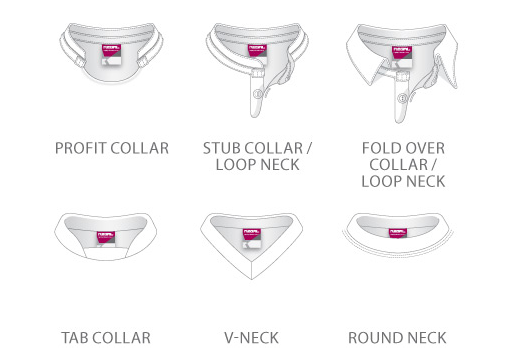
Rugby Jersey Collar Styles
When I see a classic rugby jersey, my eyes go straight to the collar. It’s often a sturdy cotton twill with a button placket, a clear nod to tradition. These soft, reinforced collars feel old-school. They are made from thick cotton or a fabric that matches the rest of the jersey.
The pro-fit revolution gave us simple, elastic designs. Names like Kinetic, Slipstream, Marauder, and Agility came from this. These collars hug the neck and shoulder, so you can barely see them from a distance. If you order custom rugby jerseys, you’ll see at least five collar choices. Each one offers a mix of tradition, team style, and on-field advantage. You can get the retro feel of buttons or a modern, minimal collar. The options are designed to show attitude and help you avoid tackles.
American Football Jersey Collars
American football treats the collar differently. I see it as part of the body armor. The design is made to work with pads, providing comfort and strength. Football jerseys stick to two main styles: a crew-neck or a V-neck. Both are low-profile and very reinforced. The collar fits easily under the helmet and pads without any fuss. There is no extra fabric and nothing to grab. From my experience, the materials are usually stretchy polyester blends. These fabrics can handle the friction from shoulder pads and the constant pulling on the jersey. In football, players grab the jersey itself, not the collar.
Collar Construction at a Glance: Key Comparisons
|
Feature |
Rugby Jerseys (Heritage & Pro Styles) |
American Football Jerseys |
|---|---|---|
|
Collar types |
Soft twill, self-fabric, Kinetic, Slipstream, Marauder, Agility, Switch |
Crew neck, V-neck (reinforced) |
|
Collar function |
Tradition, reduce grab risk, tactical gain |
Pad compatibility, comfort |
|
Material options |
Cotton, polyester, spandex blends |
Stretch knit |
|
Custom options |
5+ collar styles, color/dye customization |
Minimal design choices |
|
Collar size |
~1.5–2 inches (twill) to near-invisible (< 1 inch) |
Minimal; hugs pads |
|
Button/placket usage |
Heritage styles |
Almost never |
Jersey Numbers: How Identity Is Sewn On

Rugby Jersey Numbering
In rugby, I see the jersey number as a team assignment, not a personal badge. Each starter gets a number from 1 to 15. The team assigns these numbers based on position, not by name or fame. For example, number 1 is always the Loosehead Prop. Number 7 is the Openside Flanker, and 10 is your Fly-Half. It is a code that I feel every fan knows by heart. The replacements wear numbers 16 to 23. These players are ready to cover multiple roles with the same drive.
This system links the number to a position on the field. It means a player’s number will change if they switch positions, even during a game. Personalization is kept to a minimum. You might see names at a special event, like the experiment during the 2019 Rugby World Cup, but it is not common. Names almost never appear. Tradition says the team shines, not one person.
American Football Jersey Numbers
Now, let’s look at American football, where I find the approach is flipped. Here, your number is yours and yours alone. It doesn’t matter if you’re a star like Tom Brady (#12 with “BRADY” on the back). It doesn’t matter if you’re a rookie who just made the 53-man roster. Your identity is stitched in bold letters and digits.
In football, I believe numbers are about the player, not the field position. Numbers are assigned by position groups. Quarterbacks get 1–19, Running Backs get 10–49, Linemen get 50–79, and Receivers get 80–89. These numbers become a personal brand. The league has rules, like the NFL’s guidelines for numbers and positions. Within those rules, players keep their numbers all season. A number can become famous, like Patrick Mahomes’ #15. Sometimes a number is so loved that a team will retire it forever when a legend leaves. I have never seen that happen in rugby.
Integration with Protective Gear: How Jerseys Embrace (or Avoid) Armor

Rugby Jerseys
In my experience, rugby treats protective gear as a minor detail. The World Rugby rulebook is clear. Padding must be soft, slim, and not interfere with gameplay. You might see thin foam pads in the shoulders or collarbones. These pads are tucked away and are never more than 1 cm thick. They are always soft, not hard. Women may wear a chest pad, but the rules regulate these to prevent any unfair advantage or harm.
You won’t find big buckles or visible straps. From what I’ve seen, rugby jerseys are made to fit close to the body. They use stretchy, tear-resistant fabrics. The main goal is to give your opponent zero handholds. The jersey also covers the player’s gear like a secret. There are no clips or hard shells. Nothing sticks out. If there’s built-in padding, it’s made to blend in, not stand out.
American Football Jerseys
The jersey is like a cover for a fortress of plastic and foam. Jerseys are built specifically for the armor.
Shoulder pads? They are thick—2–4 inches (5–10 cm) tall. They can add almost 2.5 kg (6 lbs) of weight. The jerseys have deep armholes, strong seams, and stretch panels. They don’t just wrap around the pads; they are anchored to them.Elastic cuffs grip over pads. Special mesh zones help vent sweat. Tough seams handle every tug and twist. Some jerseys even use Velcro-style fasteners. This attaches the fabric right to the armor, which stops it from bunching up or creating drag.
Logos, Sponsorships, and Visual Design
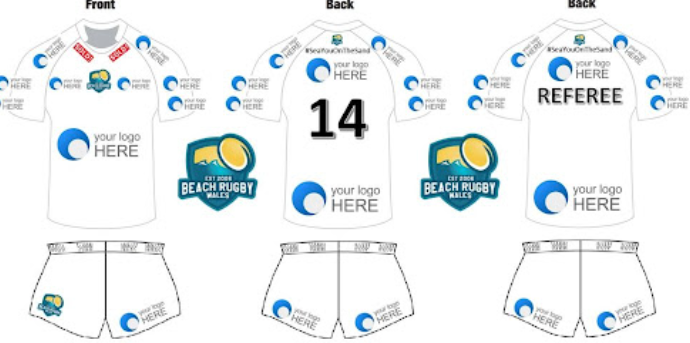
Rugby Jerseys
You’ll almost always find a team crest over the heart, but it almost never stands alone. Sponsors get the best spots: the chest, both sleeves, and even the upper back. For example, I’ve seen top English clubs like Saracens or Leicester Tigers with at least two sponsor logos just on the front. If you look at the back, you’ll find even more brand logos on the shoulders and lower back.
In my opinion, tradition is a big deal in the design. Stripes, hoops, and bold color blocks are common. Take the British and Irish Lions’ 2025 tour jersey. It’s not just red; it’s a modern take on their heritage color. It includes a woven pattern and the classic ‘grandad’ collar. I see a nod to tradition in every detail.
American Football Jerseys
The NFL takes a different approach. When I look at a Kansas City Chiefs home jersey, I see a clean design. There are no outside sponsor logos cluttering the look. The team logo, the NFL shield, and the huge player numbers (up to 12 inches tall!) are the main features. I like this clean, powerful branding. Player names are there to build a legacy, not for sale.
The large numbers are stitched in bold colors. This makes them easy for fans in the stadium and TV cameras to see. I notice the patterns are very simple. Team colors are the main focus, like the Cowboys’ blue or the Packers’ green and gold.
Conclusion
After studying both sports closely, I’ve realized that overlooked detail I mentioned: these jerseys reflect each sport’s core philosophy. Rugby’s tight-fitting design mirrors the sport’s flowing, continuous nature where protection comes from skill and teamwork. American football’s loose fit accommodates the armor needed for explosive, collision-based plays. Both jerseys tell the same story – they’re perfectly engineered for their unique battlefields, showing how form truly follows function in sports design.